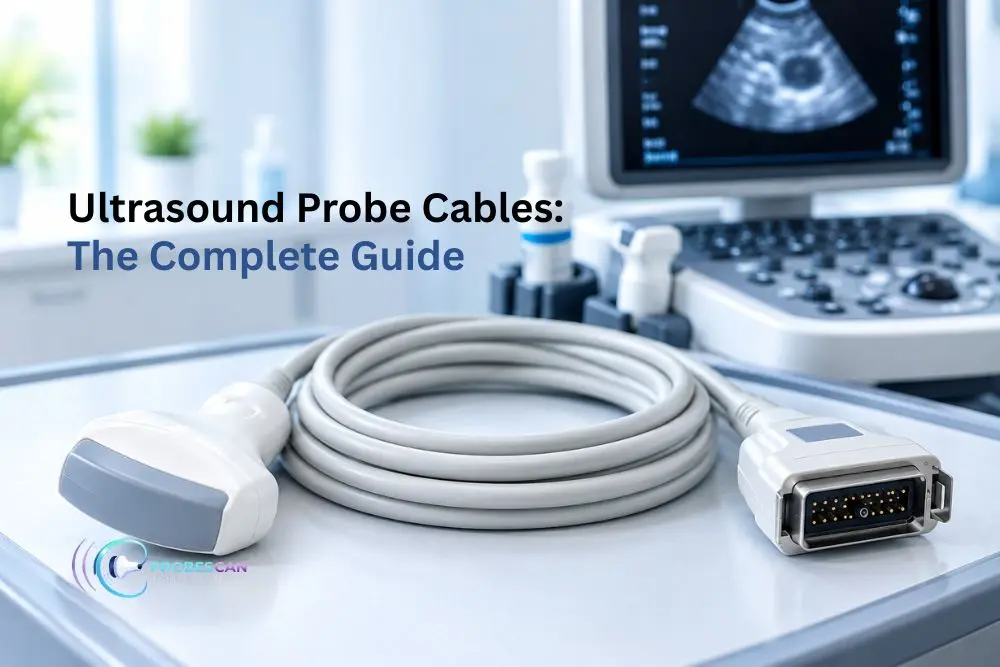
Ultrasound probes are essential components of diagnostic imaging systems, and their cables play an important role in ensuring reliable performance. The cable connects the probe to the ultrasound machine, carrying the signals required to produce diagnostic images. Damage to the cable can affect image quality, interrupt scanning, and potentially make the probe unusable.
With regular use in hospitals, clinics, and diagnostic centres, ultrasound probe cables are exposed to bending, pulling, twisting, cleaning agents, and everyday wear. Proper maintenance can help reduce cable damage, extend probe life, and minimise unexpected repair costs.
But what should you do when an ultrasound probe cable becomes damaged? Can you replace only the cable, or does the entire probe need to be replaced?
This guide explains how ultrasound probe cables work, common cable problems, maintenance practices, and when cable replacement may be possible.
What Is an Ultrasound Probe Cable?
An ultrasound probe cable is the flexible connection between the transducer and the ultrasound system. It carries electrical signals between the probe and the machine, allowing the system to process the returning signals and create diagnostic images.
Depending on the probe type and design, the cable may contain multiple fine conductors, shielding, insulation, and protective outer layers. These components must remain in good condition to support reliable signal transmission.
The cable also includes protective sections near the probe and connector, commonly called strain reliefs. These help reduce stress where the flexible cable meets the more rigid components.
Damage to any of these parts can affect the probe's performance.
Common Ultrasound Probe Cable Problems
Ultrasound probe cables can develop different types of damage over time. Identifying the signs early can help prevent further deterioration.
1. Cracked or Damaged Cable Insulation
The outer cable jacket protects the internal conductors and shielding. Repeated bending, ageing, friction, and contact with unsuitable chemicals can cause the jacket to crack or deteriorate.
Visible cracks should not be ignored, even if the probe appears to function normally. Damaged insulation may expose the internal cable structure and allow the problem to worsen.
2. Internal Wire Damage
The internal conductors can become damaged due to repeated bending, pulling, twisting, or crushing. This damage may not be visible from the outside.
Possible symptoms include intermittent imaging, signal interruptions, or changes in image quality when the cable moves.
3. Strain Relief Damage
Strain reliefs protect the cable at the points where it connects to the probe and connector. These areas experience repeated mechanical stress during everyday use.
Cracking, separation, stretching, or deformation near either end may indicate that the cable is under excessive strain.
4. Connector Damage
The connector links the probe to the ultrasound system. Bent or damaged pins, a cracked connector housing, or a loose connection may cause communication or imaging problems.
Avoid forcing the connector into the machine or pulling it out by the cable.
5. Cable Kinks and Twisting
Repeatedly twisting the cable or bending it sharply can place stress on the internal conductors. Tight kinks may also damage the cable's protective layers.
Over time, this can contribute to intermittent faults and premature cable failure.
Can You Replace Only the Ultrasound Probe Cable?
Yes, in some cases, an ultrasound probe cable can be repaired or replaced without replacing the entire probe. However, this depends on the probe's design, model, the location and extent of the damage, and the availability of a compatible replacement cable.
Cable replacement is a recognised type of ultrasound probe repair. However, not every probe is designed for straightforward cable replacement, and some repairs require specialised tools and technical procedures.
When Is Cable Replacement Possible?
Replacing only the cable may be an option when:
The cable has significant wear or physical damage.
Internal conductors are damaged.
The cable has developed an intermittent connection.
The probe's imaging components remain functional.
The probe housing and internal components are suitable for continued use.
A compatible replacement cable is available and the repair is technically feasible.
In these situations, a qualified repair specialist can assess whether replacing the cable is a practical solution.
When Might the Entire Probe Need Replacement?
Cable replacement may not be sufficient if the probe has additional damage, such as:
Failed or damaged transducer elements
Extensive internal electrical damage
Significant fluid ingress
Severe damage to the probe housing
Multiple faults affecting imaging performance
Damage that makes a reliable repair impractical
A technical inspection is necessary to determine whether the fault is limited to the cable or involves other components.
Is Ultrasound Probe Cable Repair Different from Cable Replacement?
Yes. Cable repair and cable replacement are different approaches, and the appropriate option depends on the nature of the fault.
Cable repair: If the damage is localised and the cable design allows it, a specialist may be able to repair the affected section or connection.
Cable replacement: If the cable is extensively damaged, has multiple faults, or cannot be reliably repaired, replacing the cable assembly may be more appropriate.
Connector or strain relief repair: If the problem is limited to the connector housing or strain relief, repairing that specific area may be possible without replacing the complete cable.
Not every cable fault can be repaired locally. The decision should be based on a technical assessment rather than the appearance of the outer jacket alone.
How to Maintain Ultrasound Probe Cables
Preventive maintenance is one of the most effective ways to reduce avoidable cable damage. Simple handling practices can help healthcare professionals protect their ultrasound probes during daily use.
1. Avoid Pulling the Probe by Its Cable
Always hold the probe by its handle when moving it. Pulling the probe by the cable places unnecessary stress on the internal conductors and strain reliefs.
Never use the cable to lift, carry, or reposition the probe.
2. Avoid Sharp Bends
Keep the cable in a natural curve during use and storage. Avoid bending it sharply near the probe or connector, as these areas are particularly vulnerable to mechanical stress.
Follow the manufacturer's recommended cable-handling instructions.
3. Do Not Twist the Cable Repeatedly
Repeated twisting can place stress on the cable's internal structure. Allow the cable to hang naturally when possible, and straighten it gently if it becomes twisted.
Avoid pulling the cable tight to remove a twist.
4. Store the Probe Correctly
Use the designated probe holder or storage system. Arrange the cable loosely without creating tight loops, sharp bends, or pressure points.
Do not place heavy equipment on top of the cable, and keep it away from areas where it could be crushed by beds, trolleys, or equipment wheels.
5. Clean the Cable Carefully
Clean and disinfect the probe and cable according to the manufacturer's instructions. Use only approved cleaning agents and follow the recommended contact time and application method.
Avoid soaking cable sections or connector components unless the manufacturer specifically permits it. Harsh chemicals and unsuitable cleaning methods may damage the outer jacket.
6. Protect the Connector
Hold the connector housing when connecting or disconnecting the probe. Avoid pulling on the cable, forcing the connector, or allowing it to fall onto hard surfaces.
When the probe is not in use, keep the connector protected from impact, moisture, and contamination.
7. Inspect the Cable Regularly
Include the cable in routine probe inspections. Check for:
Cracks or cuts in the outer jacket
Flattened or crushed sections
Kinks and unusual bends
Loose or damaged strain reliefs
Connector damage
Exposed internal materials
Signs of fluid ingress or deterioration
Report any suspected damage and arrange a technical assessment when necessary.
Signs Your Ultrasound Probe Cable Needs Repair
A damaged cable may show visible signs of wear, but some faults only become apparent during operation.
Watch for the following warning signs:
Images flicker or become unstable intermittently.
Image artefacts appear unexpectedly.
The probe disconnects or stops working intermittently.
The cable has visible cracks, cuts, or exposed sections.
The cable feels unusually soft, stiff, or deformed.
The strain relief is cracked or separating.
The connector is loose or visibly damaged.
These symptoms do not always mean the cable is faulty. Similar problems can arise from the probe's internal components, connector, or ultrasound system. Proper diagnostics are needed to identify the actual cause.
If the cable has exposed conductors, damaged insulation, or other significant physical damage, stop using the probe and arrange an assessment by a qualified service provider.
Why Professional Ultrasound Probe Cable Replacement Matters
Ultrasound probe cables contain delicate electrical connections, and replacement can involve opening the probe assembly, handling fine conductors, and restoring the original connections and protective sealing.
An unsuitable cable or poor-quality repair can affect signal transmission, electrical safety, image quality, and the probe's durability.
Professional cable replacement should include:
Inspection of the cable and probe assembly
Confirmation of the underlying fault
Selection of a compatible replacement cable
Appropriate repair and assembly procedures
Inspection of the repaired areas
Relevant electrical safety and performance testing
Verification of image quality and probe functionality
The specific tests required depend on the probe type, manufacturer requirements, and the repair performed.
For this reason, ultrasound probe cable replacement should be carried out by a qualified service provider with the appropriate technical expertise and testing equipment.
Is Cable Replacement More Cost-Effective Than Buying a New Probe?
In many cases, repairing or replacing a damaged cable may cost less than purchasing an entirely new ultrasound probe. However, the actual cost-effectiveness depends on the probe model, cable availability, extent of damage, repair complexity, and the condition of the remaining components.
Before deciding, healthcare facilities should consider:
The cost of cable repair or replacement
The availability of compatible parts
The age and condition of the probe
Whether other faults are present
The expected reliability after repair
The cost of replacing the complete probe
A professional assessment and repair quotation can help you compare the available options before making a decision.
Ultrasound Probe Cable Repair and Replacement by Probescan
Probescan provides ultrasound probe repair, diagnostics, and servicing for hospitals, clinics, and diagnostic centres across the UAE.
If your ultrasound probe has a damaged cable, cracked insulation, connector problems, or intermittent performance, our team can assess the reported issue and advise you on the appropriate repair solution.
Depending on the probe model and diagnostic findings, the available options may include cable repair, cable replacement, connector servicing, or further probe diagnostics.
Our goal is to help healthcare facilities make informed repair decisions, reduce unnecessary equipment replacement, and maintain reliable ultrasound performance.
Probescan provides Philips ultrasound probe repair for probes experiencing cable damage, connector issues, lens damage, image-quality problems, and other performance-related faults.
We also provide GE ultrasound probe repair and diagnostics for healthcare facilities using GE ultrasound systems. Cable wear, internal conductor damage, connector problems, and strain relief damage can affect probe performance and should be assessed by a qualified repair specialist.
Depending on the GE probe model and the extent of the damage, cable repair or replacement may be possible without replacing the complete ultrasound probe.
Frequently Asked Questions
Can an ultrasound probe cable be replaced separately?
Yes. Some ultrasound probe models allow the cable to be repaired or replaced separately. The feasibility depends on the probe's design, the type of damage, and the availability of a compatible cable.
Does a damaged cable affect ultrasound image quality?
Yes. Damage to internal conductors or shielding can affect signal transmission and may result in intermittent imaging, image artefacts, or signal loss. However, similar symptoms can have other causes, so proper diagnostics are important.
How can I prevent ultrasound probe cable damage?
Avoid pulling or twisting the cable, prevent sharp bends, store the probe correctly, use approved cleaning methods, protect the connector, and inspect the cable regularly.
Can I repair an ultrasound probe cable myself?
DIY repairs are not recommended. Ultrasound probe cables contain delicate internal connections, and an improper repair may affect electrical safety, image quality, or probe performance. Repairs should be handled by a qualified service provider.
Should I stop using a probe with a cracked cable?
If the cable has exposed conductors, damaged insulation, or other significant damage, stop using the probe and arrange a professional assessment. Follow your facility's equipment safety procedures and the manufacturer's instructions.
How much does ultrasound probe cable replacement cost?
The cost depends on the probe model, cable type, parts availability, and complexity of the repair. A technical inspection is usually required to provide an accurate quotation.
Conclusion
Ultrasound probe cables are exposed to regular mechanical stress, making proper handling and maintenance essential for long-term performance. Avoiding sharp bends, pulling, twisting, and improper storage can help prevent cable damage and reduce repair costs.
If a cable becomes damaged, replacing only the cable may be possible, provided the probe's design and overall condition allow it. A professional assessment can determine whether cable repair, cable replacement, or complete probe replacement is the most appropriate option.
For ultrasound probe cable repair and replacement assessment in the UAE, contact Probescan.
Contact Probescan
Email: support@probescanglobal.com
Phone: +971 04 451 4824
Location: Dubai, UAE